The philosophy of pounding rice
Rural Bali Adventure Activities
The philosophy of pounding rice
The philosophy of pounding rice
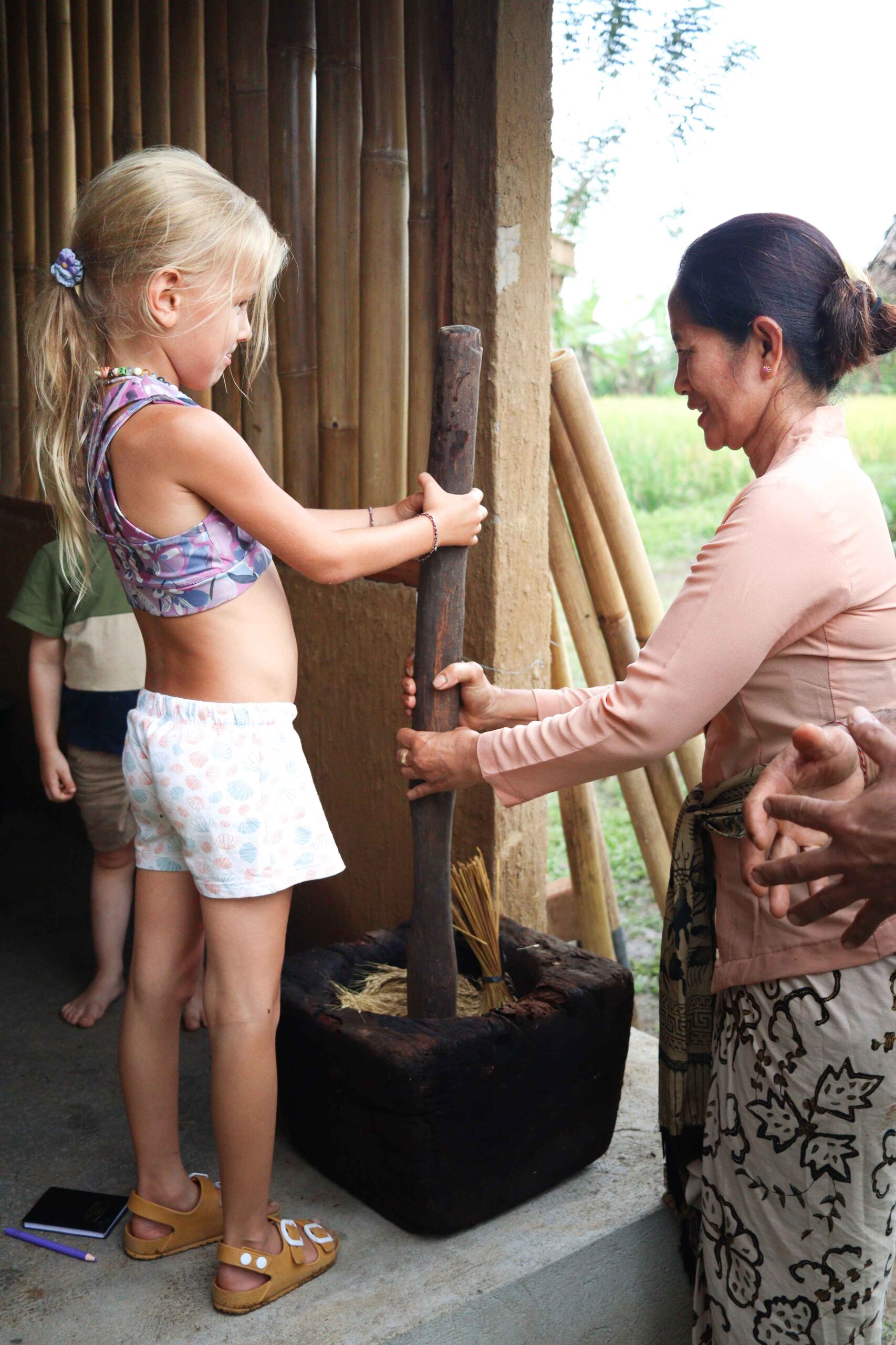
Lesung [mortal] is a traditional stone or wood household device used for pounding rice, namely separating the rice husks into rice with alu - anupright wood or cylindrical structure.
Before being pounded, rice needs to be completely dry in the sun. The idea is for the rice to come out without breaking and with the rice husk easily detached.
In Balinese tradition, pounding rice is called Ngoncang. In Balinese, Ngoncang comes from the word "gaguncangan" which means boisterous. Based on how clearly or loudly the sound made while striking the pestle in the mortar is created.
The Ngoncang tradition has existed since the 4th century, at the beginning of the arrival of Hinduism from India to Indonesia. in accordance with Tri Hita Karana concept. Ngoncang is a representation of harmony among people, God, other people, and the natural world.
Rice is thought to represent the multipurpose body part of Dewi Sri, the Goddess of Fertility. Beginning with the rice's husk, further parts of the plant can be used, such as the slightly rough skin (bran), rice bran's epidermis, rice kernels, rice stalks (straw), and rice plant stems (damen/straw).
Alu and lesung referred to as the linga yoni in mythology. Alu is Lingga symbol is represent he masculine aspect of creation, power, and energy.
Lesung is yoni symbol represents the feminine principle, fertility, and the source of life. It is usually depicted as a circular base or platform that holds the linga, symbolizing the womb or the source from which life emerges.
The yoni is often paired with the linga, symbolizing the unity and balance of male and female energies. Together, they represent the totality of existence and the creative process.
Galeri Activities